first draft

you have been called upon to serve

the answer, my friends, is blowing in the wind
– Robert Zimmerman (Bob Dylan)

Time has passed, right? Rob’s sad refrain comes vibrating through the speakers as i sip my free diner coffee. A week prior i was first wading through Edward Abbey’s polemic proposition to this soundtrack. Now i pour over newspapers from bygone days, when Moab was quaint and only dreaming of tourism to come, fully unaware of the uranium treasures hidden below.

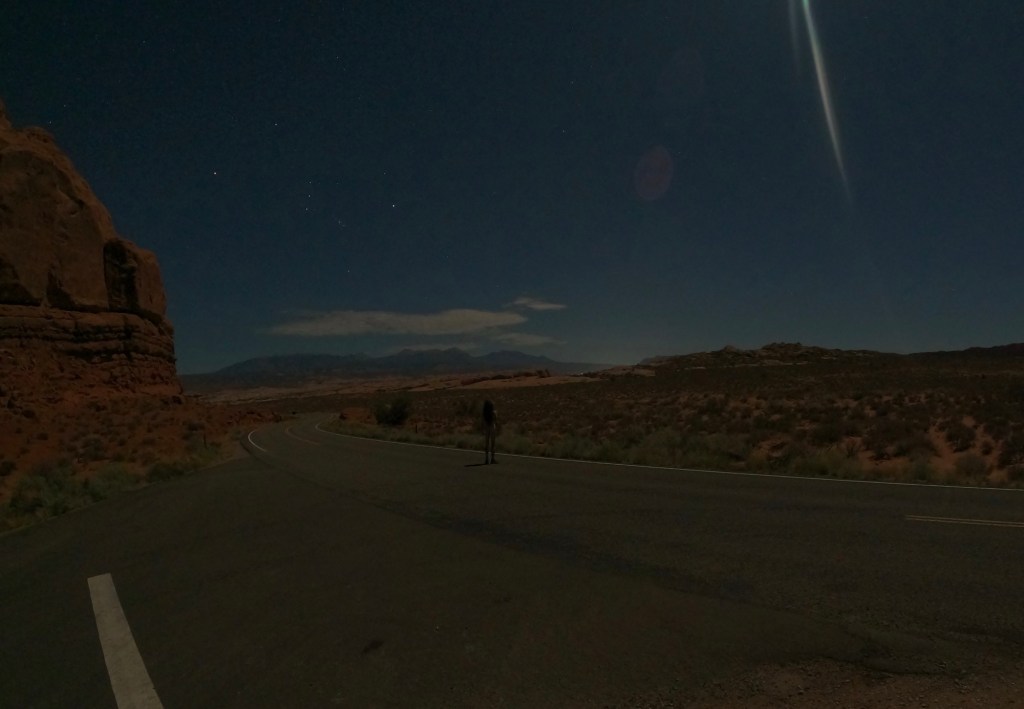
Earlier in the witching hours, under the waning but nearly full moon, i had danced down Park Avenue in Arches National Park presenting my full moon to Queen Victoria Rock and the Courthouse Towers. During the hours of the sun this canyon is populated by the automobile tourist. This night i walked solitaire to an audience of insects and stars. A gentle breeze whispered by the rocky parapets. My current year tutelage made it easy for my ears to mistake its hums as passing vehicles.

shoutouts to my green handkerchief propping up my gopro
my allergies have been abusive lately
further shoutouts to the ‘stay on trail’ sign

Signs at the trailhead cry out – Warning: drink lots of water! Take care to not lose this primitive trail – pay attention to the rock cairns marking your way!
I bring with me only my camera, descending down a beautifully crafted stone staircase, scoffing as i repeat ‘primitive’ to myself, rarely noticing any rock cairns for the well trodden path before me is difficult to lose.


First draft, as in a working copy of a thing in progress.

I feel blessed in a way by the nature of the medium for my words. A typewriter leaves a volatile minefield of xxxx across errors. A novel so permanent, a monument so easily lost among the cries of endless tomes all eating physical space, so many overlooked. My digital text is malleable, edits pass through like ghosts. My website ephemeral, similarly easily eagerly forgotten but adrift in a sea of unknowable depth, surrounded by the many also shouting their truth into the void. A reflection of myself? Quiet, comfortable, simple, with minimal impact?

In today’s chorus i am one of many. There are so many grand figures of days yore, who stamped their identities into the fabric of civilization. People of immortal deeds, with stonewrought names from when our edifices were carved, our paths blazed. What of us who live in their shadows? Who paw at their heels, daring to dream?


A first draft upon a table. In the words of a confidant, Ed could be sensitive to criticisms of his work, could be truly hurt by them. Once more does the soul resonate. A handful of my first drafts live in the annals of this website machine. Thoughts and phrases that i have plundered, mixed, and remixed into proper things. I loathe to think of any of these embryos being read casually by others, of being delved through for undercooked morsels.
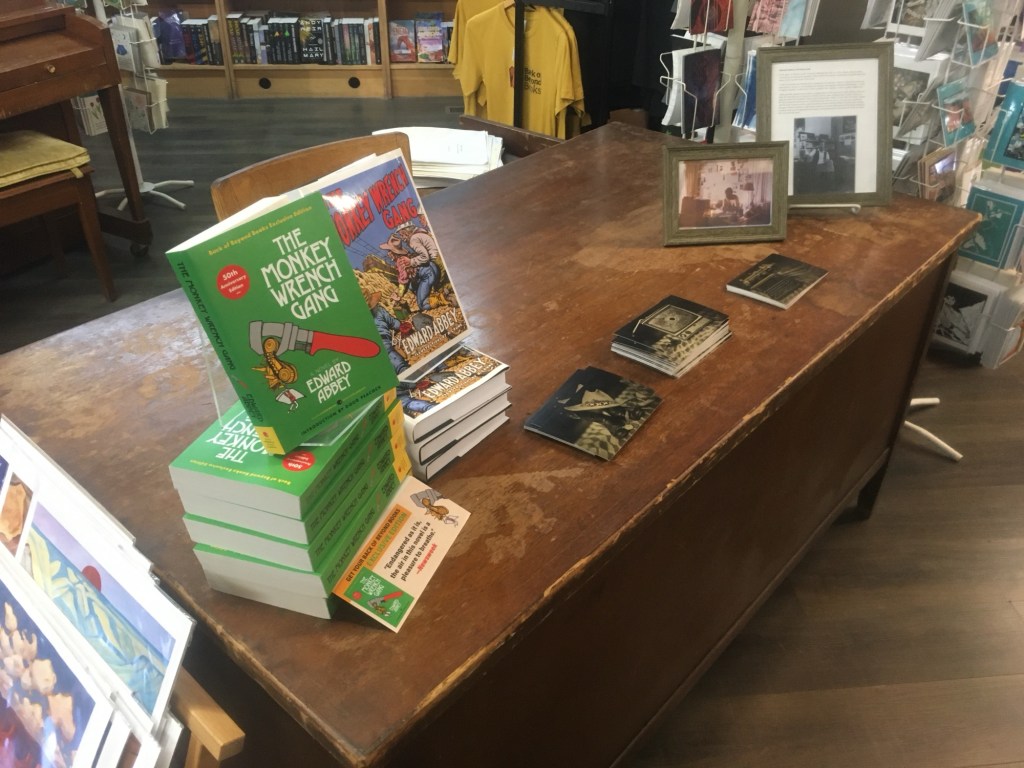
looseleaf in the background, behind reissue and reissue

Yet here i am, wielding a facsimile of a facsimile of an opus, pages 27 – 53. Ed you scamp, i’ve read more than once that you were prone to self contradiction. It would not surprise me if that were the case, my historical kin, as i dive into the batter finding treasures abound.


His acidity on display in this draft, “Are tourists people? The answer, clearly is no.” A sensible prune, along with a number of raw verbal interactions he presents. They come off bitter, too bitter; i much rather prefer the final copy where he holds more pity for the industrial tourist, a victim to greater systems of growth and wealth.

Still, through the sediment i find flecks of discarded gold. I appreciate his description of tourists as “half-human, half-crustacean,” as they mass migrate through national parks, “fleshy animals in their shells of steel and glass.” I’m also fond of his friend’s biting words, calling them “masses of asses in sunglasses,” but again the words presented are of a rather low pH for the regular to swallow. He goes on to proclaim that tourists are not travellers – for they strongly intend to return home, are not wanderers – for they are scheduled and rooted, and are not lovers of the out-of-doors – for their true love affair is with the automobile. I am sad to see all these thoughts removed; they speak heaps of truth to me, just like

Of course they don’t see anything because they haven’t the time to look; instead of looking they take photographs so that, presumably, when they get home they can look at their pictures and find out where they were and what they missed.

the more things change…


He mentions that the unpaved entrance to Arches only permits an average of ten automobile visitors (the term “tourist” was frowned upon in the Park Service with the euphemism “visitor” being preferred) per day during peak season, for only the hardy stock who were willing to pierce the sieve of cruel dirt road could approach. He theorizes that with a paved road the traffic would grow to one hundred automobile tourists per day, perhaps far more.

The Integrated Resource Management Applications Portal presents usage numbers for National Parks. For the two years that Ed was working at Arches, 1956 and 1957, the visitor counts were 28,500 and 25,400 respectively. The vehicle count numbers don’t go back beyond 1992, but over the years since then the average visitor per vehicle dwindled from around 3 to around 2. Using an uneducated estimate of 4 average visitors per vehicle in the 50s gets 7,125 and 6,350 vehicles in his years.

In 2022, Arches started to do a limited entry reservation program which requires a two dollar tithe (by credit card, of course) from every visitor from 7am to 4pm to help stem the vehicular tide. The year just before it was instated saw 685,011 vehicles on its asphalt carrying 1,806,865 visitors. Since then the numbers have hovered at around 560,000 vehicles with 1,450,000 visitors per year. Perhaps a few more than one hundred per day, indeed.

Ed saw his monument as a place of quiet exploration and feared of a future which would see it transformed into a “museum-like diorama.” Such a thing has come to pass, for i see my developed lands as nature themed amusement parks, to be respected from behind the stanchioned velvet ropes. It bothers me deeply whenever i see an egotistical visitor stomping and stamping off trail where they please. Were all of the 1.45 million to treat the land so callously, what would remain? With free rein of my most exotic lands the callous visitor tide would surely have smothered out all of their glory. I find my joys of quiet exploration these days in my National Forests, away from National Park completionists.


And the poor tourist, who doesn’t deserve this sympathy, who had left home seeking diversion and recreation, returns to his home…He has seen very little, done very little, enjoyed very little, felt very little; all that he has to show for his time, money and effort are rolls of undeveloped film, trinkets and souvenirs, and a great addition of mileage to the odometer of his car. Here at least he will feel that he has accomplished something definite. He is an eater of miles; and in eating those hundreds and thousands of miles he feels justified in removing from his check-list of places to go a further number of parks and monuments. They have been “seen.” They have been “done.”
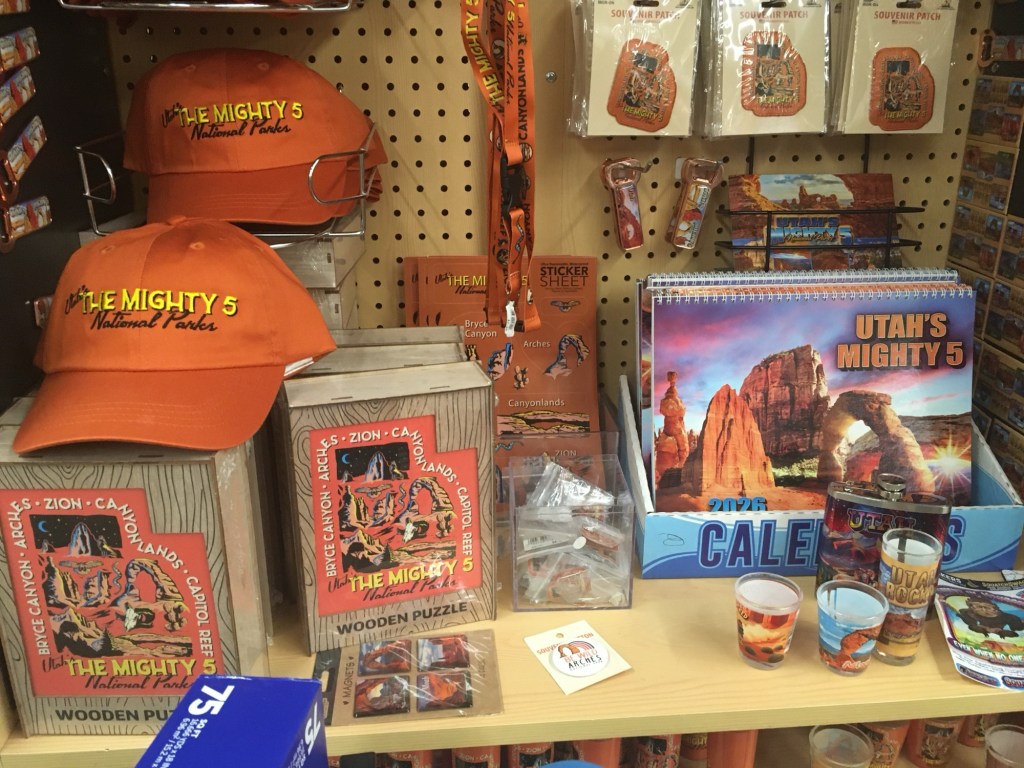
seen at city market, the local kroger variant
mass production
industrial tourism

First draft, as in the initial call to action. Imposed upon, perhaps with passion, perhaps with resignation, but ultimately by the will of another.

In the fading of 2019 i watched the film Peanut Butter Falcon. (It was delightful, 4/4 stars, worth your time.) It rekindled within me a smoldering fire that had been present for years, that desire for a Huck Finn-esque river romp, a meander through some ancient waterway of my lands. So i started research on that classic American waterway, the Mississippi. Quickly i learned of grand paddling exploits to be had upon his rustic brother, the Missouri River, and my focus changed, set on a summer 2020 Montana start as opposed to a Minnesota one. (my oh my, so many M’s had my mind mixed and mouth muddled for many months)

Being a weathered long distance traveller my plans were slapdash and confident. I read some words on how there would be some lakes that i’d come across with the portages to follow, some vast distances without easy resupply options, and how it would turn into a shipping lane at some point. I spent way too much on a guidebook, (David Miller be praised…what was that about pawing at the heels of giants?) thumbed through it, and found it as full of anecdote as it was with guidance so ended up consulting it very little. I threw my backpacking gear into a new used kayak with a bunch of plastic hiker food, water fears, and ten gallons of water, setting off into that river a couple days after my 30th birthday.

above lake sakakawea, two days before i rolled my kayak and floundered in the waves

Here in my corner i am the alpha and omega storyteller, yes please sit down criss cross applesauce (yes you can also sit on your feet as i often did) and turn your attention to these spells i cast, painting vision into your mind. I have and will continue to do my best to tell good stories, happy stories, for why share negativity and sorrows when oh so many others are doing a fine enough job at that?

It took me years to finally get pencil to paper to tell my tale of that summer because i struggled terribly with what i saw, with what had been done to that waterway. The Missouri isn’t much of a free flowing river in current year. Most of it is dominated either by great lakes kept alive by even greater dams or by full barge shipping lane chanellization. I settled upon framing my story from the perspective of my kayak to keep focus on the journey, cordoning my Missouri miseries off to a short two sentences with with as much precision as i could muster about the difficulties of an imprisoned river:

The Great Dragon of the West of the West lies low, crippled, and fettered. The induced lakes: the flooding marshlands all muddy and morose, the shorelines of fully subsumed mountainsides all silty and sad, the forgotten histories and legacies all sunken and lost, the sleek expanses weak to the common winds of the region, the no man’s land of engineering holding back an impossible force of water, the raging portholes on the far side with waters eager to be freed of this prison, all the way down to its channelized ditch: the mile markers and traffic signs delineating this jail for the mighty beast like a motorway, the cruel behemoth wardens endlessly patrolling and dredging the deeps to keep the shackles secure and the waters tame, the vacant gazes of the humans telling tales of the wrath of the flood of ’93 when the bonds broke wildly, the vindictive eyes of the humans telling tales of the flood of ’11 and the chaotic nature of its birth, the manmade placards of metal and stone with words memorializing the flooding depths from the times the Dragon lived free in its former stomping grounds and wreaked havoc as it saw fit, the rivermade placards doing the same in the form of homes and goods and lives strewn about the embankment, and that’s more than enough, thank you.

above lake francis case, waiting for wind and the wave to subside

It should be of little surprise that i found a kindred spirit in Edward Abbey. He was there so many years ago when the strength of men failed. He looked upon the glory of Glen Canyon before it was consumed by stagnant dammed water that we both scowl at. He experienced the wonders of the west before homogenization came rolling in on asphalt interstate. He could stroll in the glory of Park Avenue, solitaire, under bright blue skies. In the twilight years of wild America as development truly accelerated he was a canary crying out for all the grandeur that was to be lost. And now, thanks to Zach Gottsage, Shia LaBeouf, and the kind woman who gave me a summertime job in Moab, i am tethered to a stranger whose shadow i live in.

holy shit is that delicate arch

i had some words in here about how brevity can be accepted easier in digital form because i don’t have to claw at length to pass the hurdle from pamphlet to book. they were pruned because hooee i wouldn’t exactly call this brief

ms woody, a powerful figure in my formative years of composition never enforced a word limit on our assigned essays, saying instead “they should be like a good skirt: long enough to cover everything, but short enough to be interesting.”

“industrial tourism”

The answers were all blowing in the wind, howling out of the past, but time is up, pencils down, questions no longer asked for the solutions are all in place.

For months i have lived in Moab. Last week i visited Arches National Park for the first time. In an effort to avoid miserable bureaucracy i entered under cover of the early morning darkness for my pilgrimage to Delicate Arch. On my way out of the park i stopped by the visitor’s center and found two words proudly displayed aside a photo of Edward Abbey, that cheeky anarchist, and oh boy, here we gooooooo:

industrial tourism

As i returned through town i visited the local bookstore that opened the year after his death and spent $9.99 plus tax on the cheapest of three versions of Desert Solitaire. I’m sure that eventually i’ll get around to reading all of it, but one essay had me more interested than the rest: Polemic: Industrial Tourism and The National Parks (polemic- a controversial argument). In those twenty-five pages Edd shares thoughts about the changing of the times, the transition to a paved and automotive future of our lands designated as the most revered.

But first – a detour regarding relics of old. Cactus Ed’s desk. This treasure was rescued from forgotten storage by his widow, Clarke Abbey, and delivered here to be revered. Sitting upon it is a facsimile of his first draft of Desert Solitaire, looseleaf, wreathed in editorial remarks and saturated with cut content far sassier than what made it to print. In a 50th celebration of the book a kickstarter was held to raise funds for its reproduction. Fifty copies were produced. I am very thankful that the entirety of Polemic’s first draft (working titles: Parks or Parkinglots? Industrial Tourism and the Parks Out of Doors: Are Tourists People? Are Park Rangers human?) can be read here for far less than the $750 listing price i saw online.
Does his desk also want for an unmarked grave beneath endless, cloudless skies beside its owner? Does it resent the oily fingers which touch it, fingers probably controlled by the very industrial tourists who its owner resented and lamented, peeved and pitied? I plied it for answers. Much like the no-name resting site of its former master it replied “no comment.”

A week passes. I sit at a paved area of designated automobile tourism, waiting for the sunrise to paint colors upon my Moab Rim, upon my La Sal Mountain Range, and the glory of the petrified dunes, my newest companion, while reading my mass printed pernicious polemic prose. Eddard’s manifesto washes over me like a torrent of acid rain in this drought season. A blessing, but it stings and scorches me terribly oh so terribly. This legend, this anti-hero of environmentalism, this painter of pictures with his tremendous text looks directly at me as he composes in 1967, “in the first place you can’t see anything from a car.” A man nearby shares these blue moments of nautical dawn on telephone calls within his four door sedan before driving off just as the sun rises. He at least gives me the courtesy of a “good morning,” as do the other sunrise enjoyers on their collapsable P65 warning adorned plastic chairs, unlike the daytime tourists i mingled with last week who rarely even spared me a passing nod.

The ancient road that led Eddy to his fated summertime government housing lies forgotten beside the paved demon, the asphalt amusement park ride i have now roamed twice, that i now sit adjacent to. My mind and soul bubble and sizzle and i find myself transmuting: half of me a man in this plastic robot future, composing these his sorry thoughts on aged tech in an aged case held together by aged tape – half sitting at a heavy desk, plinking at a typewriter while referencing swirling script in a weathered notebook, eyes aflame, positing if tourists are really people and if park rangers are really human. My sorrowful future consciousness reaches back, pleading, are you aware of the darkness to come? The advancement of decadent tourism? A monolithic recreational vehicle howls by behind me. What sabotage would you commit, seeing your words and legacy so praised in an institution you would so resent?

The sun has fully risen, he cooks the bite of night from my soul, my spirits, and my bony fingies with his majesty. My coffee has also worked its wonders, and lest i soil my last remaining pair of undamaged cotton legwear i depart my glorious viewpoint to drive to the nearest facilities down at the visitor’s center (i fully neglected the view to the north all morning, the orange dance upon the Courthouse Towers. no worries, i will have other sunrises – besides, i already beheld their wonder for two summers in the 50s.) My commute down the switchbacks of Arches National Park Road grant a view of its entryway. The queue is in its early morning infancy with timed entry permitted vehicles approaching the cashless national park gates. Why ever would the parks of my nation accept the currency of my nation? But i am being foolish, plastic is the currency of my nation these days.

Outside the visitor’s center a park ranger hoists the American flag as i gather two handfuls of sun scorched litter. I finish my morning duties and flush my toilet, as well as the toilet of a foreign tourist as he washes his hands. He doesn’t look at me.

I ask a ranger at the front desk about what questions he gets the most often. He replies with a meaningless “depends” and doesn’t elaborate any further. I gather more litter from the parking lot as i depart.

The day has arrived, sporting a nice 69 degrees as i drive by the longer queue of automobiles with their windows up. I merge onto 191 south as the Florida tourists who were tailgating me impatiently try to overtake me on my right side.


OPEN EVERY DANG DAY
FREE COFFEE FOR LOCALS

I struggle to eat a cinnamon roll the size of my face, thankful for the free coffee aiding me in my labor. Through the speakers Robert Zimmerman moans about road walks and blowing winds while Edmund’s words continue to blister my wet skin, painting an idealized future of National Parks free of motors but indebted to humans and nature. I sip on black coffee, pretty smoky and dark for a diner cuppa, as Edgar looks up to see the sky and sleeps in the sand like a holy dove. I pause every few paragraphs to take another bite and close my eyes and sit in the quiet National Monument from a bygone age, arches washing to the sea. I reach the end of my twenty-five page fantasy (but not my pastry, i tap out with about eight bites remaining) and Freewheelin’ Anarchy Abbey removes survey stakes placed by the Bureau of Public Roads.

Based on my lackluster research, this action could be considered a violation of 18 USC § 641 Theft or Destruction of Government Property, 18 USC § 1361 Willful Injury to Government Property, or 18 USC § 111 Impeding Federal Officers, with punishment anywhere from one year in prison to seven years of prison with a possible fine from $1,000 to $250,000. Ebbey Adward was lucky to have lived in an age when these acts were celebrated and fetishized instead of in current year surveillance state dystopia.


not an ending

as my old parasocial friend john 117 would say, i think we’re just getting started.

summer in boscobel

Wisconsin’s Outdoor Recreation Capital

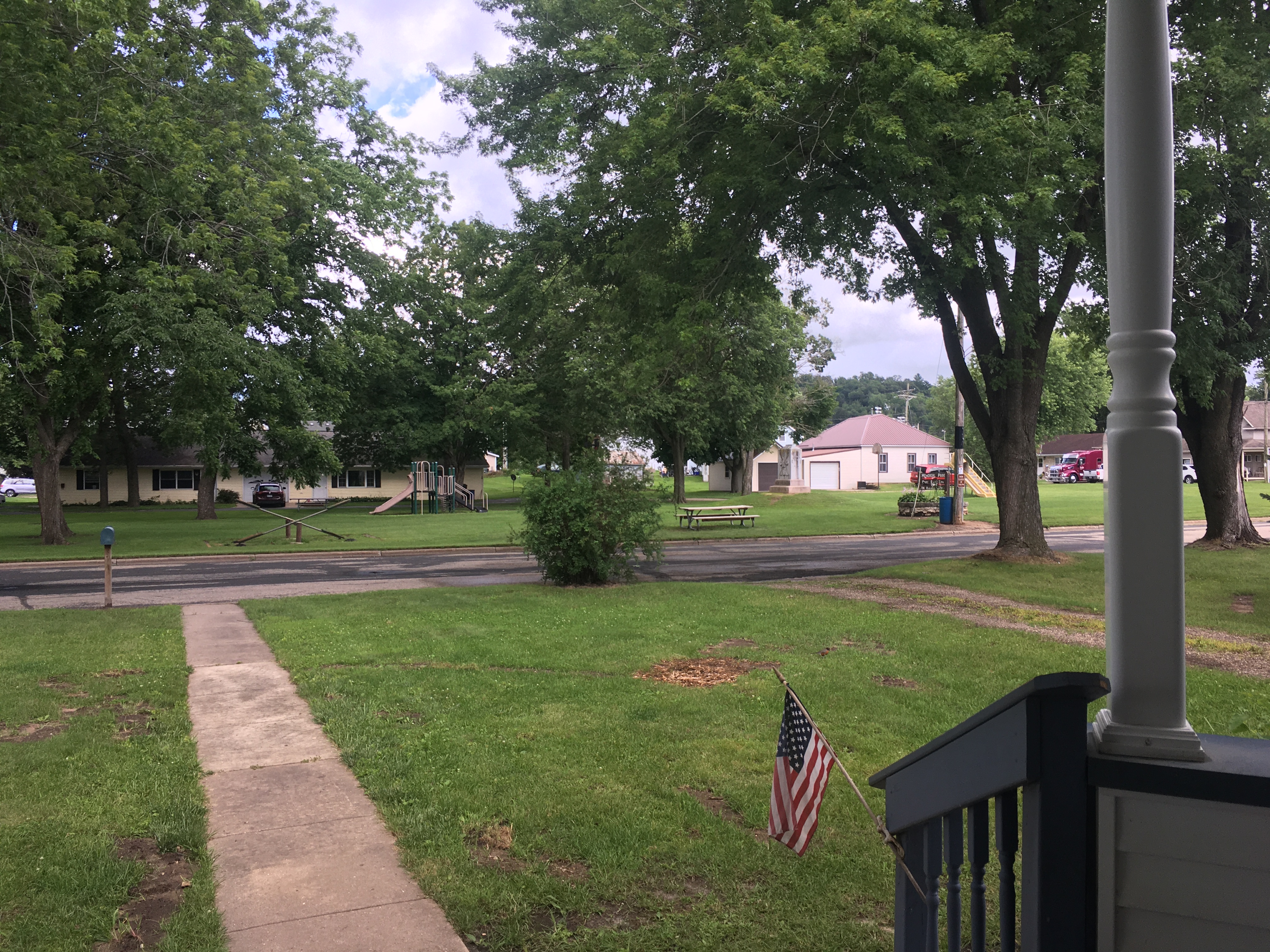
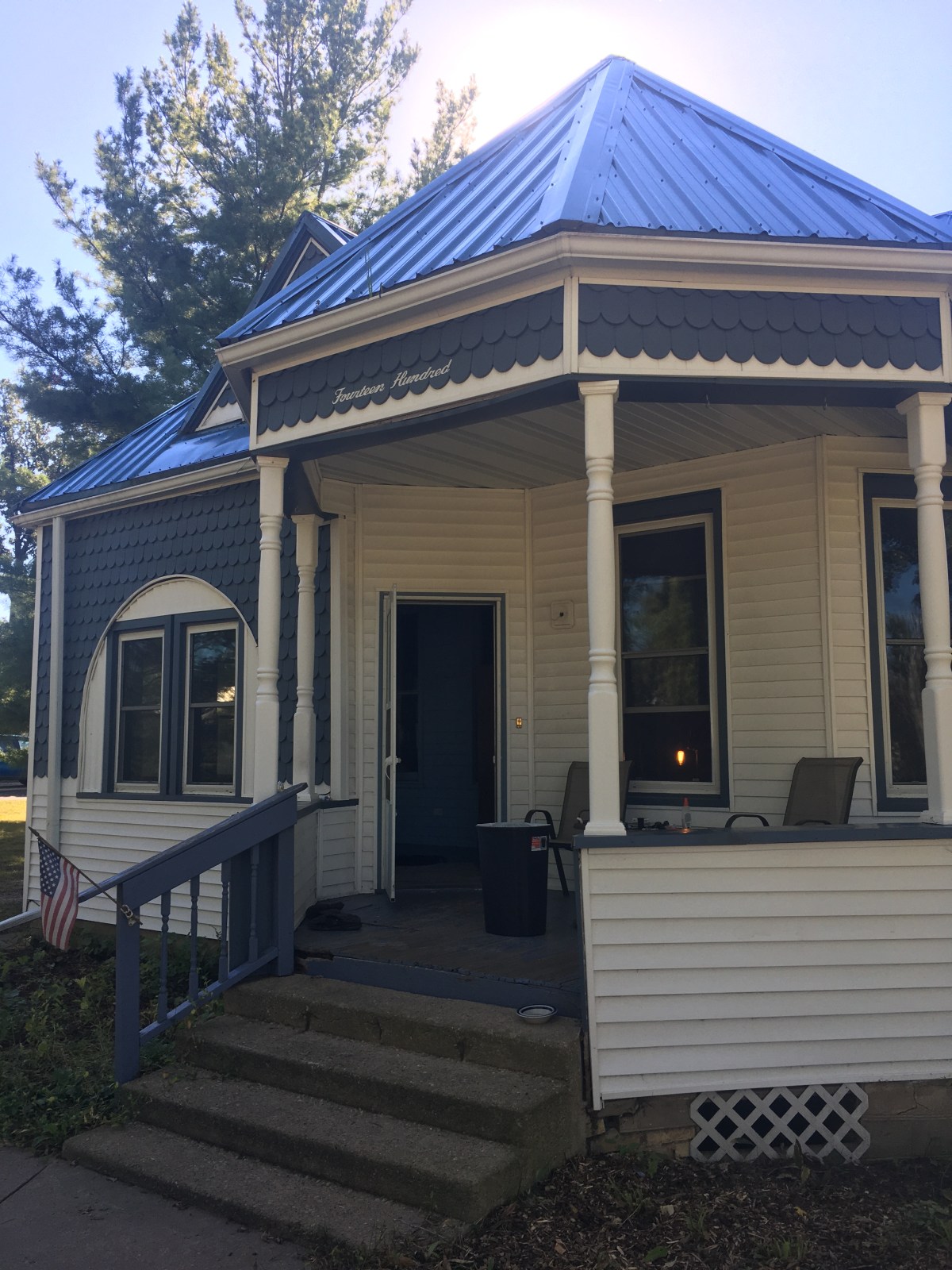
blue roof, o blue roof

“Boscobel? The drugs were bad there, that’s why we got out.” -a new friend along the Mississippi River after i told him where i spent my summer.

“So why the hell did you choose Boscobel of all places?” -a passenger in one of the cars while i was hitchhiking to get there. He told me of the perceived social politics between the local towns: the natives of the town to the south of Boscobel see it as the river rat town down by the Wisconsin River.

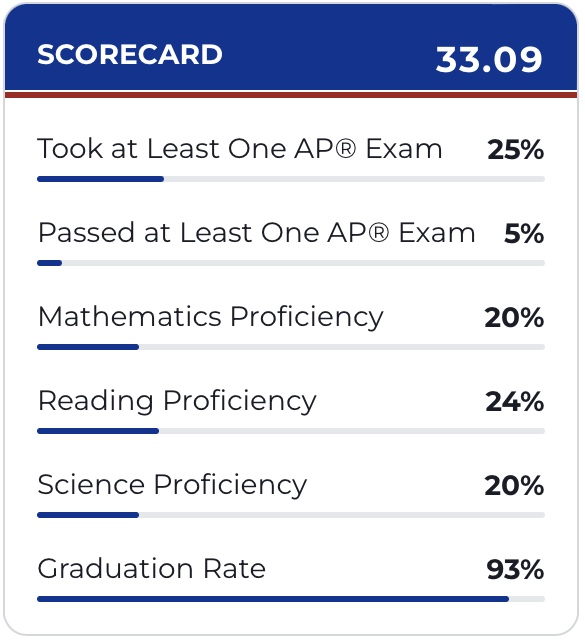
scorecard for boscobel high school, courtesy of us news and world report.

A town of around 3k as the green sign reads. The two parallel main roads, Elm and Wisconsin, nestled between a pair of creeks: Crooked to the west and Sanders to the east. Wisconsin’s Outdoor Recreation Capital as the billboard reads. A metal Blue Roof upon the house i orbited for the season.

Small town America, such a common stomping ground of mine… The park with pavilion and picnic, b-ball and baseball. Armed forces memorial [sans space force]. Modest town hall. Modest library with modest hours if you’re lucky. Aplenty with natives, born and raised of generations. Main streets cancerous with space for lease. The edge of town with the homogenized american boxes: one of the common breed dollar stores, a fast food, a gas station with a name you’ve seen before. Of these traits Boscobel was no exception, except for the space for lease. The town was alive with storefront…except for the hardware store. After years of service they went full liquidation, to close soon. I joined most of the town in that store the morning the big sell off sale started and overheard the owner, “i wanna ride my motorcycle, you know?” The True Value on the homogenized side of town will continue serving the town.

Small town America. I have passed through, i have loitered for a few days, but i hadn’t spent months in one before summer 2024. From May until September i sat under the Blue Roof, working when conditions would have me. Turns out most of the words i have about those months are in regard to the footpaths of this town.


November 20th, 1992, 10:45 PM, two gunshots ring out near Memorial Park. Two days later, as the Schultzs return from church, they find two new holes in their house on their front porch. Thirty two years later, i find this front porch.

Our neigbor Kim had tended many buildings in Boscobel, the Blue Roof included back in the day. He says it’s one of the oldest homes in town, and i sure felt that in the musty basement and the cozy second floor. Nowadays he plays a wacky wild Euchre variant with five of his lads at his bar. I love the breeds of Euchre around the midwest, they have such big “you’re not from ’round these parts” energy. It’s true, i’m not, we use two fives to keep score in civilization, not like those four and six barbarians-i digress. He replaced the bullet punched siding in ’92. Turns out i spent the whole summer sitting beneath their entrypoints.

O the porch, blue porch. Ever sit on a porch and say “mmhm”? Ever sit on a porch and wave at everyone and everything? Ever look? at that? Boy howdy i sure have and let me tell you….mmmmhm. I swear, this used to be an unwelcoming part of town. Now we can’t make it past this corner without getting greeted by my fellow man. There comes the neighborhood. Look, it’s Hoppy the squirrel! I was getting worried, i hadn’t seen him for a week. He’s missing a front paw and a tail, but he’s doing alright. Tail-napped by little Blitz, Kim’s tree climbing spitfire of a dog, but he’s still living large.


“The destination for outdoor recreation.”  Let us turn our eyes to the trails around town. Our first stop: the Boscobel Bluffs to the east of the suburban sprawl. A sandy trailhead before a 1.5 mile out-and-back trail up through the woods, completely overgrown by waist high weeds on my first walk. I was delighted to see that it was pruned to a useable level on a follow up visit. Cute, cozy, and functional, albeit a bit short. Unpopulated by others in my experiences. i didn’t take any pictures either lol not sorry

Our next stop i frequented very often [and have a lot more to say about], the B-side to compliment the blue porch A-side: The Sanders Creek Trail, the logically named two mile gem alongside Sanders Creek. Well, one mile, but it’s out and back. Well, i heard locals call it not a gem but something more like “smoker’s ditch.”

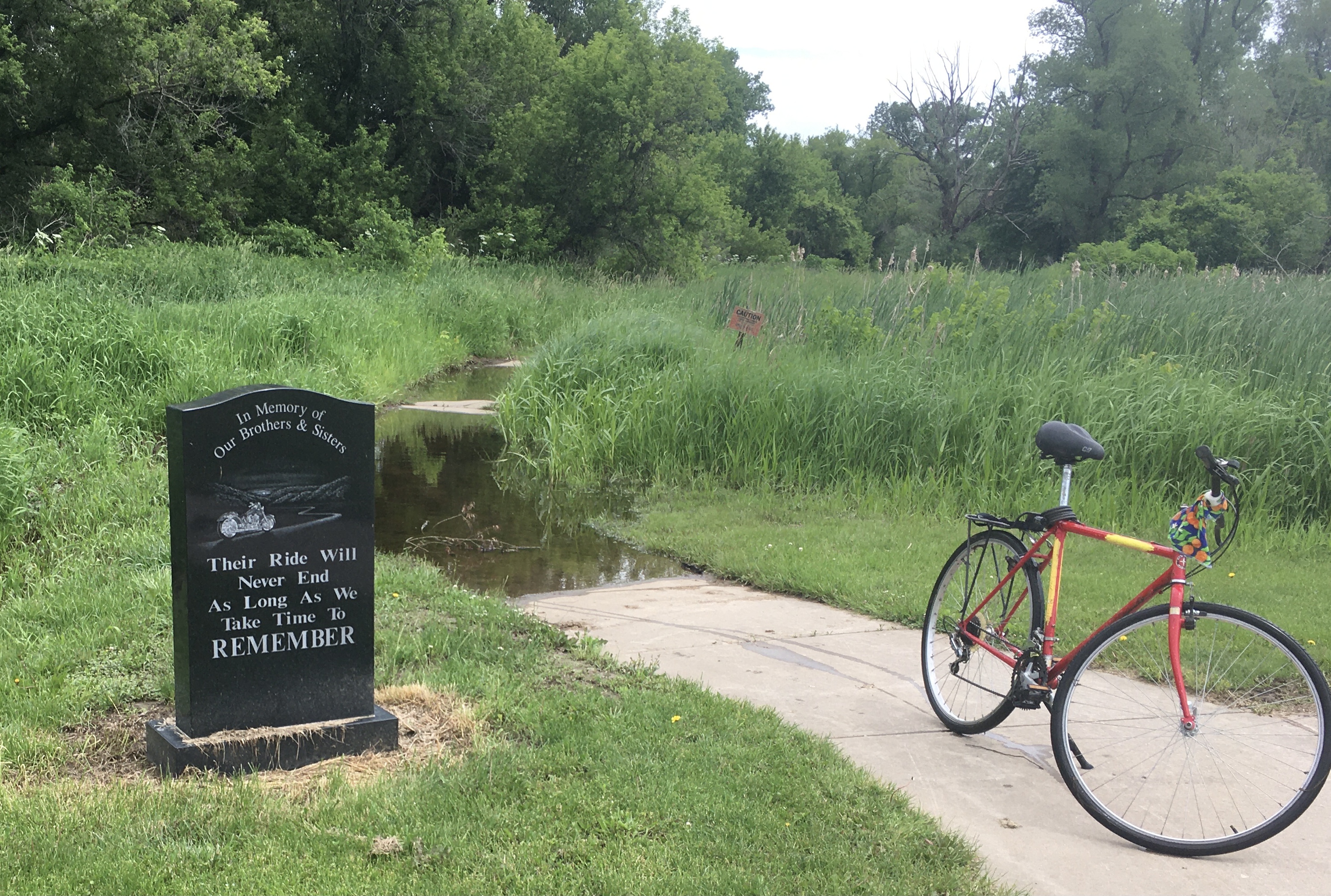
Well, let’s check with another source from another time: the Wisconsin Explorer, Kenneth Casper. Usually more of a hardcore trail enthusiast, in 2020 he finally found his way to the Recreation Destination of the whole state to see what they had. “I spotted the Sanders Creek Trail across Highway 61 behind Walnut Street and I could see it was flooded over. So, I walked up Green Street and down Nevada Street and found a dog park I could walk through to get onto the trail.” picture below looking in from 61 and Walnut, the northern end of the trail

take time to remember

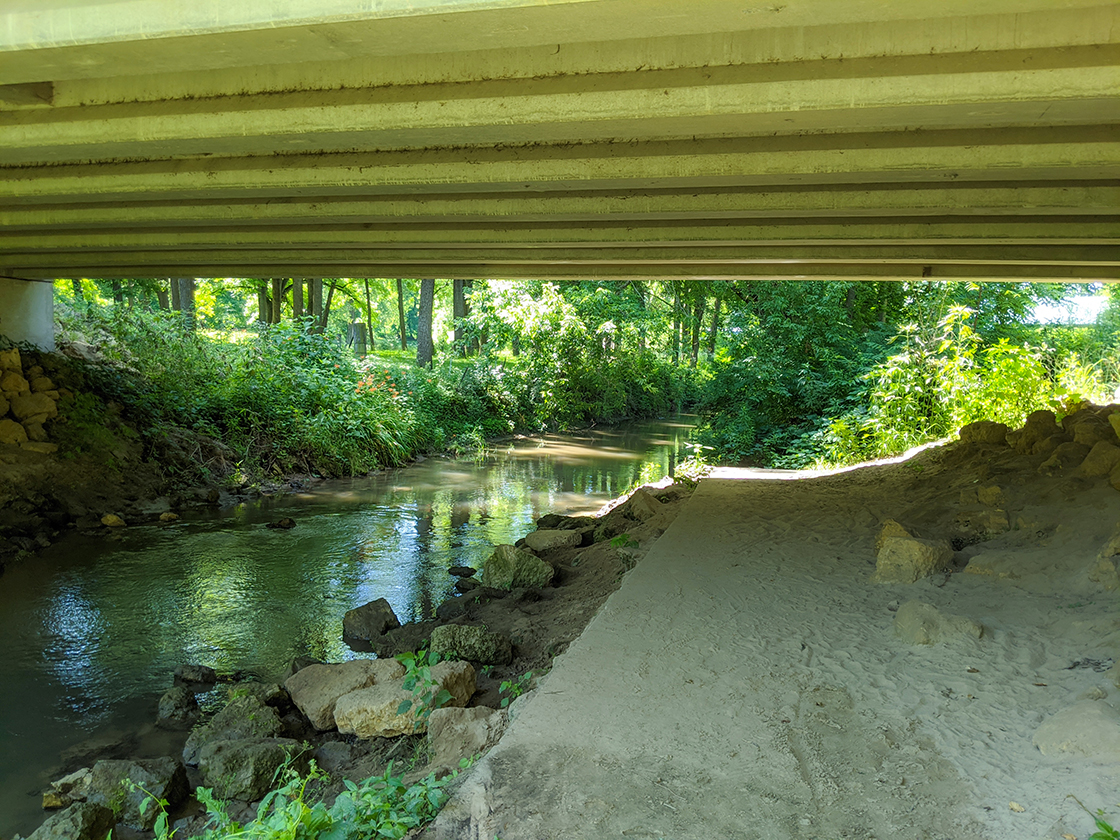
I often relaxed underneath the bridge at the trail’s southern terminus sourcing my water, sad songs on my guitar flowing like the cold clear creek from my bridge covered hobo haunt. Heading north along the trail we find a field i would lounge in. The nearby church’s bells would sing at 9am on Sundays. Continuing we often find the sidewalk subsumed, first by sand [ghosts of a floody summer] and later by water as it passes by the downtown stretch, benches to one side and swimming holes for the local youth on the other. The stretch of trail between the dog park and the northern end -our flooded end witnessed by Kenneth- was fully reclaimed by the creek for my whole summer, some sections nearly a foot deep, sidewalk sagging, reclaimed by the marsh.

Sidewalk sagging? Floody conditions? Another source: swnews4u.com, with words from the locally relevant Boscobel Dial. This article from 2022 is concerned with our flooded terminus and gently points fingers at possible causes: blockage in the floodlands the creek flows towards, a clogged small culvert beneath the highway, or a sinking sidewalk in wetlands.

cloggy culvert sure enough

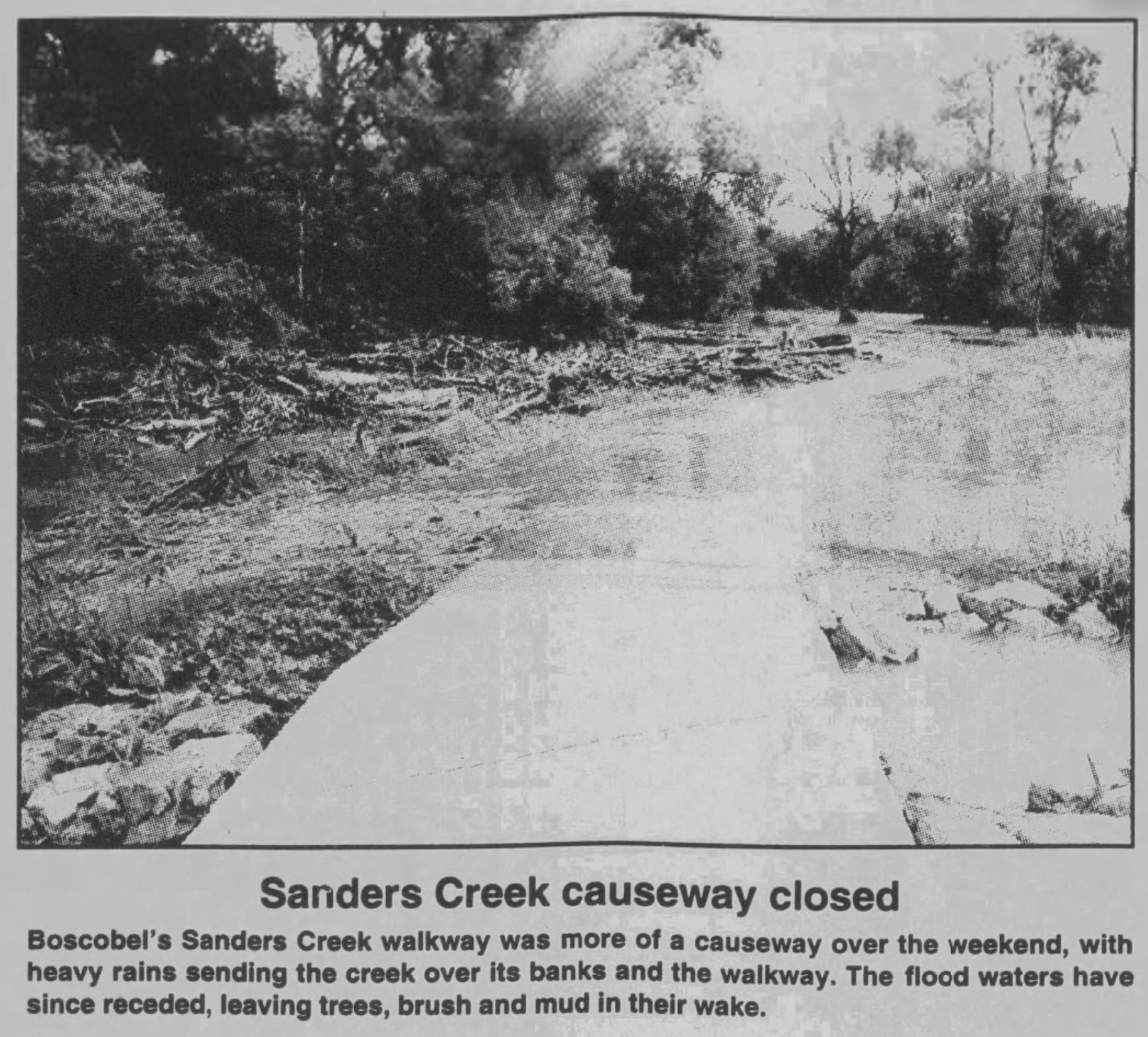
So recent, the year 2022, the issues of this walkway annual and habitualized. Let’s return farther, to the birth, to the purity of creation, goals lofty and problems absent. October 1998, initial work is underway for what was called the Sanders Creek Walkway. Here our words come from Alderman Jamie Goldsmith. The DNR had recently required canary grass to be planted alongside the creek, an effort Goldsmith took issue with, “It’s a barrier. It’s a barren, ugly, drainage ditch.” Grass by a creek does belong, there i disagree, but of the drainage ditch we are in agreement. He continues, “I think once we get that pathway in there, it will be easier to get in there for maintenance.” Get in there for maintenance, goals lofty indeed.

October 2003, the walkway grows, our hotbed wetbed arrives.

ooh…pruned, level, maintained

May 2004 and the springtime graces our walkway with wetness.

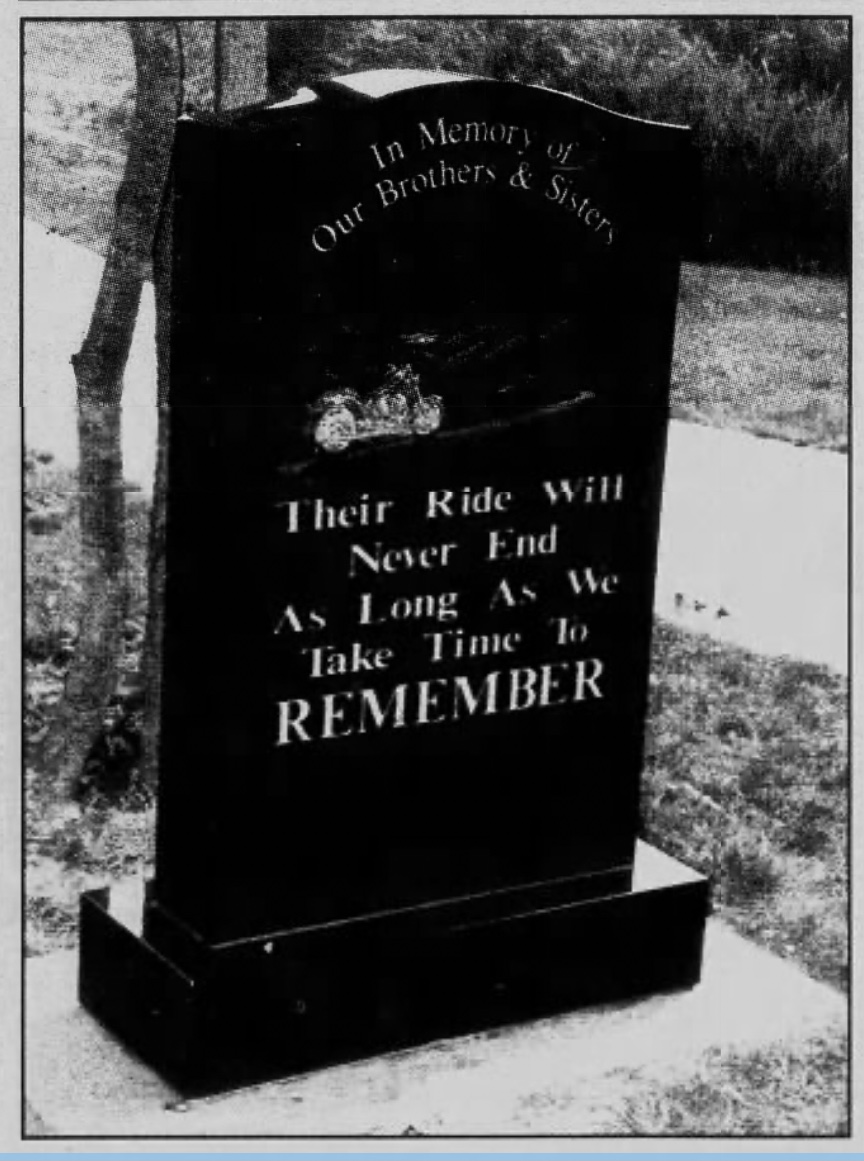
June 2007 and our memorial to forgotten friends arrives.

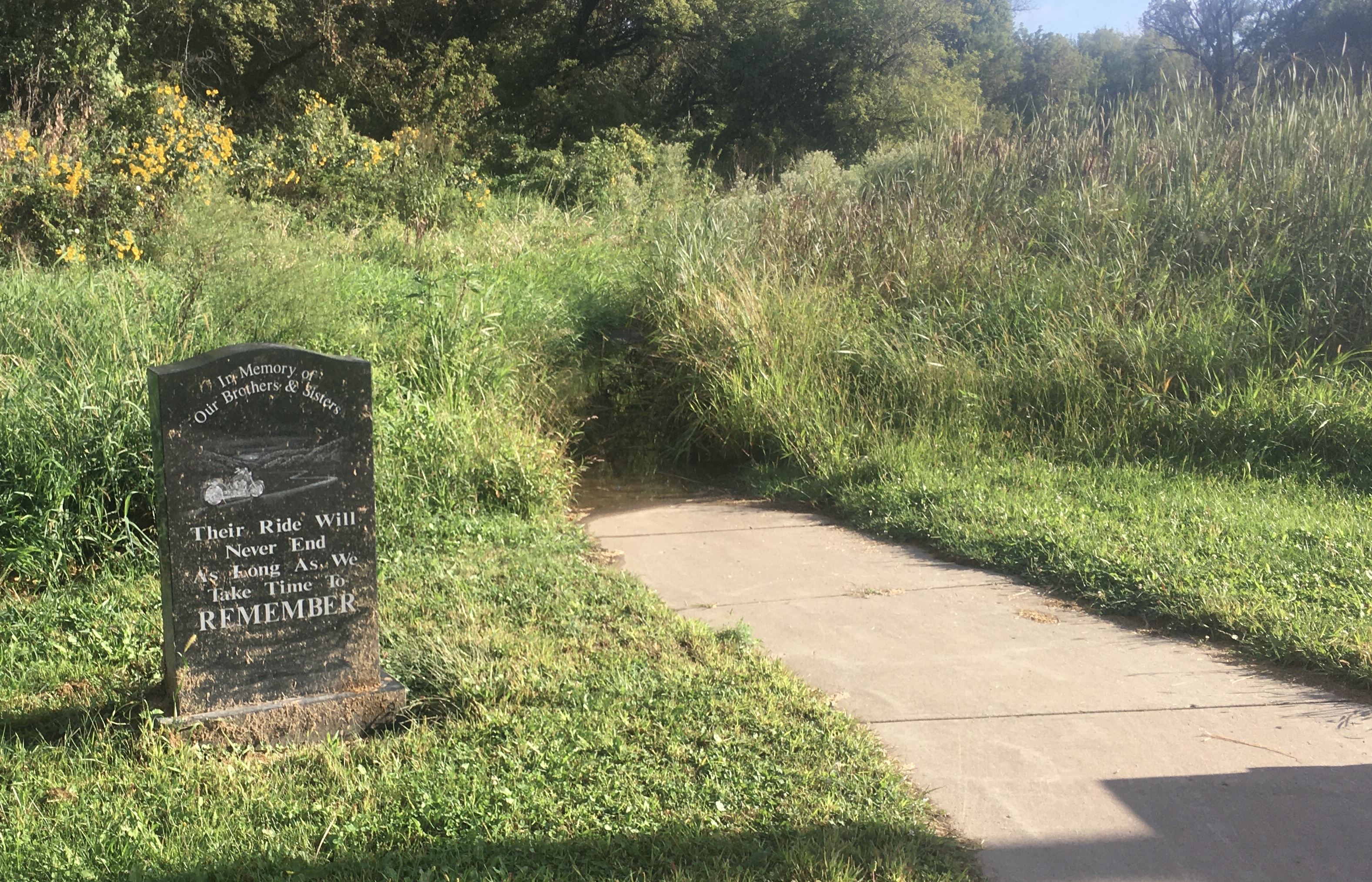
We only get a hint of what lies behind the monument in that photo unfortunately. Here it is in September 2024. Notice my fingerswipes upon the monument, brushing away the detritus of a floody summer.


Across from the wet Sanders Creek Trail we join the first phase of the Great Wisconsin River Trail: about a half mile of sidewalk. This modest sproutling from the Sanders seed has lofty goals of becoming a long beautiful looping concrete vine along the floody wetlands of the river. Boasting sponsorships from the local hospital, energy company, two different packaging companies, grant money over $1.5mil, and who knows how many donations i certainly hope a brighter future is to come from this project because it’s awfully cloudy from what i’ve seen. 

Expansion joints, (or control joints) are the intentional lines cut into a concrete pour to prevent wild cracking and buckling as it grows and shrinks with temperature changes. I believe i spotted two of these on my last brisk walk down this path [an embarrasing failure, i was preoccupied mentally with planning my day of organizing gear for a river float.] I lost count of the number of wild cracks along what used to be a handsome, smooth stretch of paved trail. Functional still i guess, but kind of a difficult start to what will ideally be a cool thing. A bridge connecting Woodman and Wauzeka would be rad even if it’s not for motor traffic, but it’s also two sub-phases away from completion. I hear that the next sub-phase of construction won’t take place for maybe three years, and that the heads of this project want to pass it off to the state parks and let them do the deed. the best layed plans…


So anyway Trapper for mayor. Pray for the kids in Boscobel. Pray for the families stuck under financial stress there. Pray for the users and abusers of substances lost there. Tremendous shoutouts to Timber Line Coffee and their bombastic Sumatra coffee beans. More bashful shoutouts to my bougey coffee ass for being the reason why they now have a button for cortados in their cash register. Try their chocolate cake it’s actually the best.


conclusion? what conclusion? i’m sick with empathy everywhere i go and boscobel is a part of me now because of it. my list of american locations i have to visit on my cross-country migrations grows.

small town america not to be confused with very small town america: a post office and a gas station if you’re lucky. towns like those i rarely have lingered in, usually just a pit stop.

i also learned that expansion lines are lethal to the spines of fathers, as opposed to the cracks for the backs of mothers

suddenly

on engineered climate change upon the misery river

gadget how you been, hah? you paddled the missouri river a few years ago, what was that actually like?


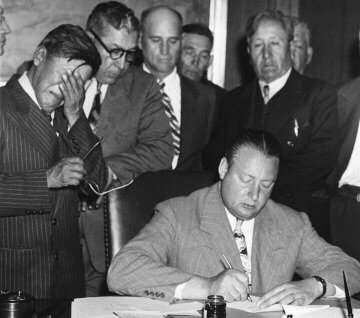
“We will sign this contract with a heavy heart…With a few scratches of the pen, we will sell the best part of our reservation. Right now the future doesn’t look too good to us.”

The pen is returned to the table and the Missouri River is pregnant with Lake Sakakawea. Four hundred and eighty square miles of land condemned to death by drowning. It is 1948 and the chairman of the Mandan-Hidatsa-Arikara Nation weeps.


Meriwether Lewis, the amateur scientist, weighed equal volumes of the Missouri and Kansas rivers and recorded the former as twice as heavy because of all the sediment it carried. Thus the river has long been called Big Muddy…But today its nickname is a misnomer because the straitjacketed river no longer braids its channels through miles of life-enriched bottom wetlands. Today’s Missouri is an enslaved river impatient to be free.

Bill Lambrecht opens his book, Big Muddy Blues, with lamentations. He follows this with more lamentations from the humans directly impacted by river engineering. It is 2005, and he brings attention to how difficult it is to access the Missouri River from Kansas City.
In 2020 Jon and i parked on a forgotten beach in Kansas City. I sat and watched our things while he bushwacked up to a taco shop, it was still difficult to access the city.


The most striking showing of the Missouri’s straitjacket, however, is to be seen looking down on open country along the lower river. There you can observe how the system of pile dikes – curving fences of stout timber bilings – stone revetments, willow mattressess, and short “wing” dikes succeeds in pinning down the channel and giving permanence to the banks.

It is 1951. Richard G Baumhoff, in great detail, documented the history of the river and the early stages of river engineering. It brims with anticipation, a bit of sorrow, and already the straitjacket metaphor.


When the Army Corps built six mainstem dams on the Missouri River, life for the indigenous peoples who called the river home changed immediately and dramatically. Gone are our ancient riverbottom homes, our medicines, our sacred places, the earth lodge and tipi village and hunting camp sites created by our beloved ancestors. Gone are the places intrinsic to our origin stories and to events in our oral histories that are alive in our people’s minds and hearts that are still related today.

The loss of our river homes affected every aspect of the quality of our lives: spiritual, mental, physical, emotional, and socio-economic lifeways, all of which make up our very identity as native peoples. Altering the flow of the river altered the face of our Mother Earth, and we are still reeling from and dealing with the consequences of the changes brought by the dams.

Yellow Bird, of the Mandan-Hidatsa-Arikara Nation, pours heartache. These words were spoken decades ago. The artificial lakes still conceal secrets.


a great beast of destruction and life, locked by the might of man and inertia of bureaucracy. it lived and breathed in its valley, roaming freely within its cage of erosion. times of tranquility balanced by times of wild chaos and energy: creation itself reconstructed at a flow, gentle riparian womb provided at an ebb. reason and fate drew the stasis of rectangles, full of will, into its valley, praying for stasis in return. the beast lashed out, over and over, until tempers flared and shackles fettered, victory claimed and subservience proclaimed, waters reclaimed and concrete maintained.

-me just now.


well
hmm
it sure was a thing i did that changed who i was, what i see, and what i think.

N 41.16576° W 95.86022°

on a day of peace in unprecedented winds

Currently the only storyteller of my long paddle down the Missouri River on this internet pocket is my kayak [brand Perception, model Corona, sunshine yellow/firecracker color, purchased off of craigslist from a fella named Rob in Montana a day before hitting the river] and i think it did pretty okay. When i try to storytell about those months a thick morass of grumpy Edward Abbey-esque feelings blows in from the past, gets all up in the way. The kayak had little interest in such topics, keeping mostly to its relationship with a landlubber and the journey of the summer. I’ll do my best to leave my crunchy emotions on the sidelines for these days: October 10th-12th, 2020.

top left – burger place
top right – landing in the city
bottom right – home, 10/11/20

Welcome to the Missouri River, ~miles 617 thru 602. I kayaked through these miles in the company of Jon and his beautiful craft, the Selkie Boy, on a warm autumn day. Three days earlier saw me leave the final wild-flowing stretch and enter the channelized lower Missouri, one day after that i caught up with Jon on the shores of Decatur. Morale was high, as were our speeds on this shipping drainage ditch.

O Missouri, big designer river of this side of this side of the Mississippi [not to be confused with the big designer river of that side of this side of the Mississippi, the Colorado River is that a monkey wrench in my hand] It has been a complete makeover for, despite intentions, the few freeflowing natural river portions live with human fingerprints encircling, the oils from meddling hands floating down from engineering marvel to the pure ‘wild and scenic river’ sections. These, the final 750 miles of river before the confluence outside of St. Louis, got their new look based off of long no-named highways. Utility first, utility second too. Also third through sixth if the laundry list of original goals are to be believed. Fit for shipping barge, the long-haul truckers of this locality. Signs signs signs, got a mile marker here, channel crosses to there, fast lane through these, right downstream shore rectangle green, left downstream shore triangle red. Sweeping turns, always turning these days like old rivers do. The hills it once chiseled with its might now just ghosts in the distance, for it is now quarantined into a prison ditch, only staging destructive escapes to rampage when conditions are perfect. Usually is it cursed here, looking up at the embankments locking it off from its great floodplain, wet with civilization these days instead of mud. Great dredging barges deepen the ditch and wing dike dams enforce the twists and turns of the walls. The Missouri keeps mementos of its successful prison breaks: big human made things, toppled and tucked in thickets too bothersome to move without wild flood water. ok that’s enough let’s continue past the Where

Jon arranged a meetup with a friend in Omaha on the 10th. We awoke that morning with about twenty easy river miles to our stop in the city. Our camp was pristine, a cove of dunes surrounded by forest. In a pattern that would continue for our entire time together, the neighborhood beavers slapped their tails on the water in the soft moonlight disturbing Jon’s sleep and i hadn’t heard them a single time lol

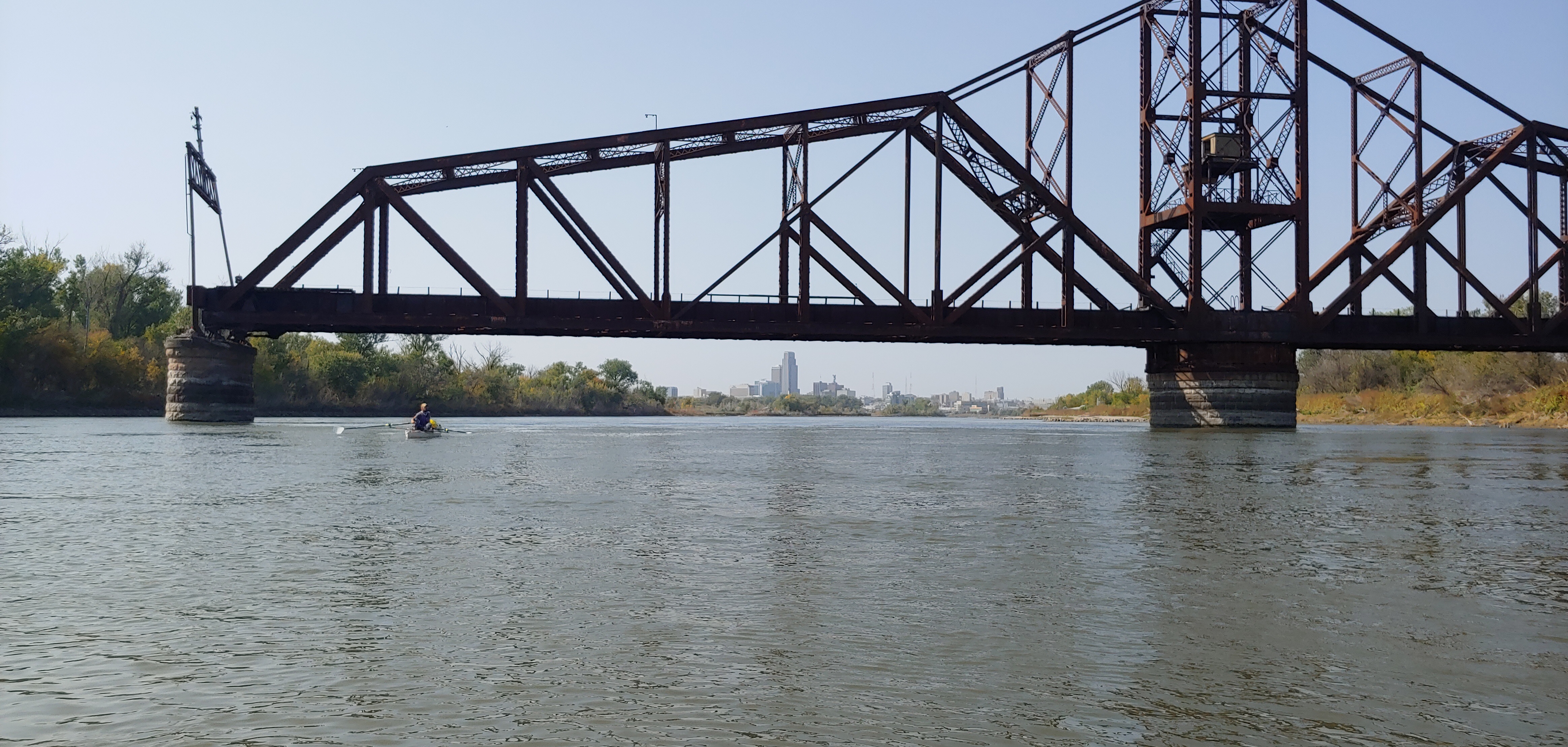
A dead railway bridge served as our welcoming gate to the big city after our peaceful commute. As we passed beneath a pedestrian bridge downtown i could hear families above chatting about long distance journeys and i gave them a wave. I often hear such talk when i’m out and about and i usually feel awkward no matter how i choose to respond to such a stimulus. We parked, met up with his friend, and got a car ride around the city to a solid burger joint. There i was greeted by current year 2020 and the era where physical menus are o-u-t out. I had to borrow one of their robots as i had left my robot behind and i’m not fluent in qr code. current year, man,

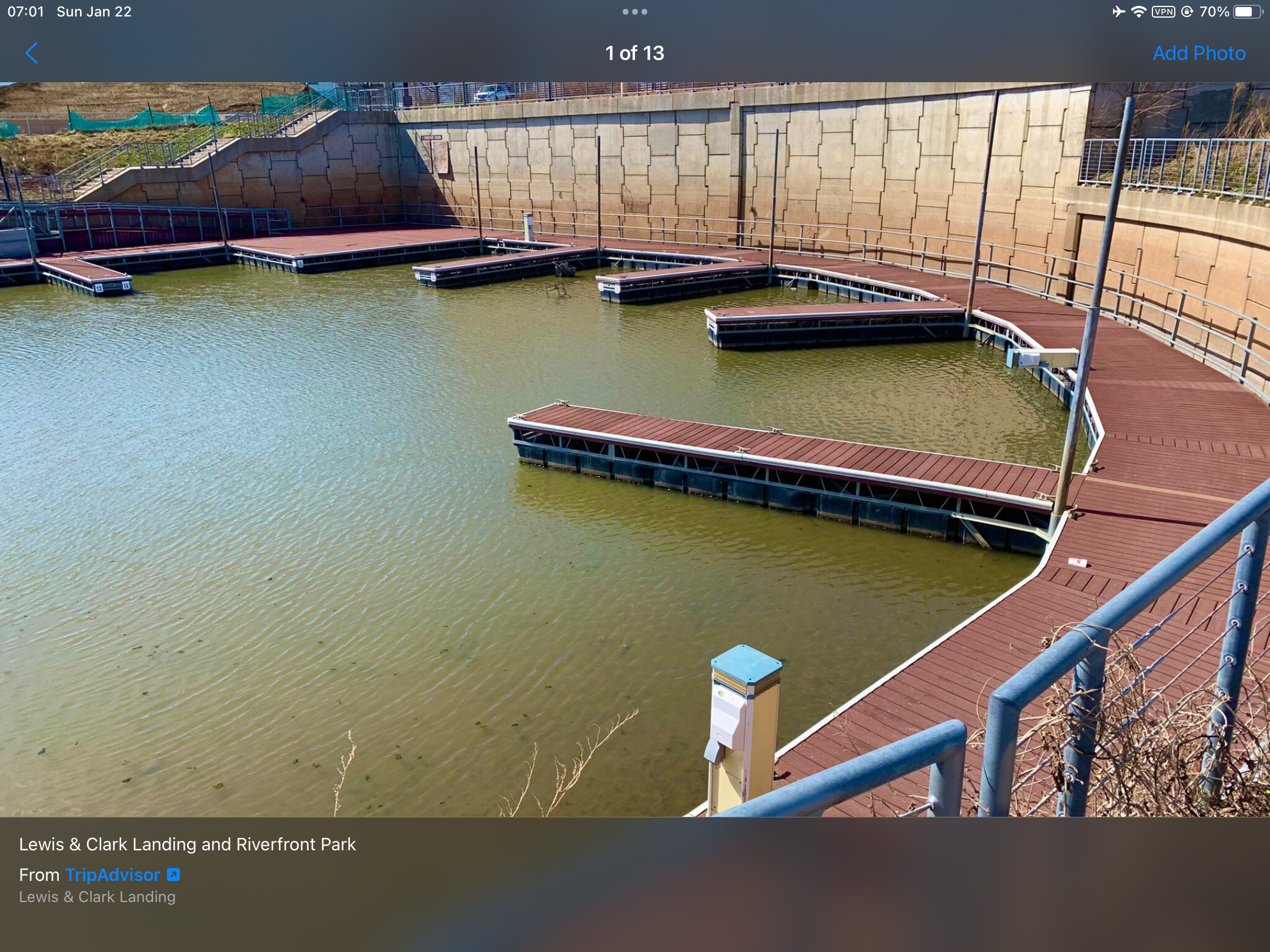
this landing was completely dried up when we arrived. we parked downhill out of frame to the left and climbed up sandbar and dock to get to the city

The afternoon waned and we set off from the city to find our place to hide for the 11th. The forecast called for howling winds from the south for the day, headwinds in our primary travel direction for the next 250 miles. Far too windy for me and the Corona to want to contend with [i bet the great Selkie Boy could’ve held its own in that tiring fight] so we searched for a decent home with proper windblocks. The river turned to the east and our eyes settled on the righthand [green rectangle] shoreline. Our search was interrupted, wonderfully, by a flotilla of weekenders complete with lite beer on a downstream float. We partied up and chatted for a while as the river bent to the south and continued to the west. Our lefthand shore [red triangle, there will be a test] now presented a healthy sampling of sheltered real estate for us to peruse.

Current year 2020 was a loww water year for the muddy dragon. A curse: swaths of silt and loam on lakeside were revealed and navigable channels were fewer, easier to bottom out on [shoutouts to the mess of channels around the Niobrara River confluence that i lost a couple hours on because i picked the wrong path and had to return upstream.] A blessing here in the ditch, for wing dike dams are efficient at harvesting sand. Low water levels meant that nearly every one of these dams was showing off its hoard of river droppings. Some hoards towering, some broad, others muddy, but here, this sandbar was perfect. Blank fields lay to the south, a fine runway for the winds to reach a gentle shield of tree and bush. Beyond that, the prison wall riverbank leading to our wide, flat, sandy beach. We parted ways with the weekenders and set up shop on the sandbar.

The next day was windy as prophecised. Behind our shelter we idled the day away peacefully. A dumping ground of old National Geographic magazines sat beneath a tree nearby that made for fun reading. One had an article about the St Louis Arch being built that felt fitting for the journey. A cheap kite was buried in the sand, perfect for the day. Jon patched its wounds and gave it one more dance with the wind. I sang, i read, i napped, good times.

Evening creeped in with clouds in tow. Pangs of lightning popcorned in the dark miasma that advanced toward us – this time from north. A check in with the weather seers told us of its caliber – hours of angry windy rains would live with us through the night, and we were to be gazing right down the barrel instead of ducked behind cover. Storm lines were staked and tightened around our tents. We steeled ourselves as we watched the Thunderbird advance before hunkering down and bracing for the arrival.

boyo did it arrive. A wall struck my tent and flattened it instantly. I stepped outside to try to give remedy and was aggressively sandblasted as i squinted and refit my storm lines with little effect. I was reduced to supporting the inner walls of my tent with my body as i was destroyed by coarse wet sands ripping around everywhere. Restless rough hours passed, i did my best to never check the time as i was trapped in that cocoon, sitting half upright while half asleep. It must’ve been early AM hours when the winds settled and i could as well. I emerged the following day with a few new irritating scratches on my glasses, and sand sand everywhere.

That day, the 12th, was lovely. An easy 40 miles sat between us and our destination, Nebraska City. Weird Al dropped a song with Portugal the Man. A park was only a couple miles downstream: a toilet for the morning. The Platte River joined the party, giving strength to the Missouri. A friend texted me about a cool half-sized guitar that i now own. That evening we pulled into our next river city and met up with a river angel family who put us up at their house. They had a urinal in their big fancy garage. Their laundry machines were in the kitchen, so they had a glass jar on the counter filled with tide pods.


in the photos presented [and along every part of the muddy] the same three word phrase repeated with noun following – Lewis and Clark Landing, Lewis and Clark National Historic Trail, Lewis and Clark Campsite, Lewis and Clark Cathole, Lewis and Clark Spot For Standing Together and Pointing. ooh i’ma wild outtt the land erasure the wanton destruction ooohh the tethering of the riparian landss of delicate beautiful creation stomped out by progress utility prevention the cross-counter punch of ruin taps forehead deposits riprap pours concrete evicts life erases hill no stop no no don’t hold me back i’m still warming up